
training-seminars-header

Cambridge Healthtech Institute的培訓研討會提供涵蓋了廣泛的學術理論及其背景,以及現實生活中的案例研究和所面臨的挑戰及適用的解決方案資訊。每個培訓研討會都結合了正式講座與互動討論和活動,以讓學習成果最大化。以熟練的講師來主持培訓研討會,以適用於當前研究的內容,併為該領域的初學者提供重要指導。以目前研究的內容為焦點,提供針對在該領域的初學者重要的指南。

培訓研討會僅限面對面實體會議。

Monday, September 28, 2026  9:00 am - 6:00 pm

TS3A: AI-Driven Design of Biologics: State-of-the-Art ML Models & Real-World Applications

Artificial intelligence has driven remarkable breakthroughs in structure prediction, sequence design, and protein engineering. This course equips researchers - from those seeking a first foothold in the field to practitioners looking for deeper insight into emerging models and their application - with a rigorous, grounded understanding of foundational tools including AlphaFold, Boltz, ImmuneBuilder, ESM, AntiBERTy, ProteinMPNN, and RFDiffusion, as well as emerging pipelines such as BindCraft, RFAntibody and BoltzGen. Three building sessions move from foundational principles to real-world application, examining where the models come from, model selection and thoughtful application, and how performance benchmarks hold up - or don't - in active discovery pipelines.
David P. Nannemann, PhD, Vice President, Rosetta Commons Foundation

Session 1: Foundations 

  • Origins and evolution of AI protein models: from early sequence models to modern structure-based diffusion approaches
  • Understanding training data: sources, biases, and implications for model generalizability with best practices for model selection 

Session 2: Using AI Models

  • AI model selection and thoughtful application, with discussion of inputs and outputs
  • The role of the oracle in generative AI protein design

Session 3: Real-World Applications 

  • Benchmarked performance vs. real-world biologics discovery: navigating the gap
  • In silico selection metrics, sampling strategies, and translating computational results to the lab

INSTRUCTOR BIOGRAPHY:
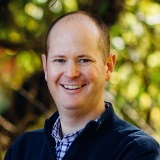
David P. Nannemann, PhD, Vice President, Rosetta Commons Foundation

David is an expert in protein engineering and computational design, with extensive experience applying AI-driven modeling tools in an industry setting. He serves as Vice President of the Rosetta Commons Foundation and Industry Chair on the Rosetta Commons board, helping bridge academic advancements with industry applications. As Managing Member of Rosetta Design Group, he collaborates with companies of all sizes to tackle complex challenges in biologics design. David's deep expertise in leveraging cutting-edge tools like Rosetta, AlphaFold, and diffusion-based models for protein design make him an invaluable guide for participants looking to apply AI-driven biologics design in real-world settings.

TS4A: The End Game: From Lead Optimization to Drug Candidate Selection

Drugs interact with complex physiology to give different activities under different conditions. The discovery candidate selection process must demonstrate these different activities in anticipation of therapeutic outcomes; failure at this stage is the most costly and the translation of drug activity to human pathophysiology is a notorious graveyard for projects. Pharmacology is the unique discipline to prevent this. This course will take registrants through the unique aspects of Pharmacologic analysis of drug-target interaction to convert descriptive data (what we see) to predictive data (what will be seen in other systems). Data from a range of candidate targets (GPCRs, ion channels, enzymes) and ligands (small molecules, biologics, allosterics) will be used to demonstrate the techniques Pharmacology has to offer to quantify drug potency, efficacy and modulatory activity in a variety of settings. In addition to discussion of techniques, a series of case histories will be used to illustrate the concepts.
Terrence P. Kenakin, PhD, Professor, Pharmacology, University of North Carolina at Chapel Hill

Detailed Agenda
Session 1 (9:00-11:00 am)

  • Introduction to candidate selection
  • Some unique features of pharmacology as a discipline
  • The drug discovery landscape and discovery infrastructure
  • Pharmacologic assays: The Eyes to See
  • Pharmacologic tools: The Dose-Response Curve

Session 2 (1:30-3:30 pm)

  • Determining mechanism of action
  • Ligand affinity
  • Ligand efficacy
  • Allosteric protein function

Session 3 (4:00-6:00 pm)

  • Pharmacokinetics for discovery
  • Early safety studies
  • In Vivo residence time and kinetics
  • The Endgame: case studies 

INSTRUCTOR BIOGRAPHY:

Terrence P. Kenakin, PhD, Professor, Pharmacology, University of North Carolina at Chapel Hill

Beginning his career as a synthetic chemist, Terry Kenakin received a PhD in Pharmacology at the University of Alberta in Canada. After a postdoctoral fellowship at University College London, UK, he joined Burroughs-Wellcome as an associate scientist for 7 years. From there, he continued working in drug discovery for 25 years first at Glaxo, Inc., then Glaxo Wellcome, and finally as a Director at GlaxoSmithKline Research and Development Laboratories at Research Triangle Park, North Carolina, USA. Dr. Kenakin is now a professor in the Department of Pharmacology, University of North Carolina School of Medicine, Chapel Hill. Currently he is engaged in studies aimed at the optimal design of drug activity assays systems, the discovery and testing of allosteric molecules for therapeutic application, and the quantitative modeling of drug effects. In addition, he is Director of the Pharmacology graduate courses at the UNC School of Medicine. He is a member of numerous editorial boards, as well as Editor-in-Chief of the Journal of Receptors and Signal Transduction. He has authored numerous articles and has written 10 books on pharmacology.

* 活動內容有可能不事先告知作更動及調整。

Choose your language
Chinese
Japanese
Korean
English


Conference Programs

9月28日(週一)

Symposium: Induced Proximity-Based Drug Discovery
專題研討會: 近接誘導型藥物發現

Symposium: Generative AI/Machine Learning-Driven Drug Design
專題研討會: 生成式人工智慧/機器學習驅動藥物設計

Training Seminar: AI-Driven Design of Biologics: State-of-the-Art ML Models & Real-World Applications
培訓研討會: 人工智慧驅動生物製劑設計:最尖端機器學習模型與實際應用

Training Seminar: The End Game: From Lead Optimization to Drug Candidate Selection
培訓研討會: 最終階段:從先導化合物優化到候選藥物篩選

9月29日(週二)至10月1日(週四)

Emerging Drug Targets
新興藥物標靶

Novel Drug Modalities
新藥模式

Lead Generation Strategies
先導化合物生成策略

Innovative Discovery Technologies
創新發現技術

Antibodies against Challenging Targets
針對挑戰性標靶的抗體

Next-Generation Conjugates
新一代偶聯物
Radioligand Therapies
放射性配體療法