2026年 培訓研討會(僅限面對面實體會議)

*需要較高價報名費或單獨報名

Cambridge Healthtech Institute的培訓研討會提供涵蓋了廣泛的學術理論及其背景,以及現實生活中的案例研究和所面臨的挑戰及適用的解決方案資訊。每個培訓研討會都結合了正式講座與互動討論和活動,以讓學習成果最大化。以熟練的講師來主持培訓研討會,以適用於當前研究的內容,併為該領域的初學者提供重要指導。以目前研究的內容為焦點,提供針對在該領域的初學者重要的指南。

Drug Discovery Chemistry的培訓研討會僅限面對面實體會議。

Monday, April 13, 2026  10:00 am - 5:15 pm

TS1: Drug Exposure at the Target: The Role of ADME and Pharmacokinetics

This training seminar describes how pharmacokinetics (PK) affects drug exposure at the intended target. The seminar opens with a foundation of clinical PK including the determination of key PK parameters from Cp-time data. Course materials also cover common preclinical ADME assays that allow estimation of a compound’s human PK properties. The materials bridge the idea of a compound’s PK and its observed pharmacodynamic effects (PD) through coverage of PK/PD modeling. Various drug modalities (e.g., small molecules, antibodies, and peptides) illustrate the concepts of the course.
Erland Stevens, PhD, James G. Martin Professor, Department of Chemistry, Davidson College

Session 1:

  • Determining PK parameters from Cp-time data 
  • ADME & membrane permeability 
  • Plasma protein binding & metabolic stability 

Session 2: 

  • Compartment models & PBPK 
  • Drug modalities & formulation 
  • PK/PD models

This course is designed for: 

  • Scientists and researchers in drug discovery or development who want a stronger grasp of how PK and ADME data impact efficacy and safety.
  • Graduate students or postdocs in pharmacology, medicinal chemistry, or pharmaceutical sciences looking to build real-world context around their training.
  • Regulatory professionals seeking to better understand how PK data are generated and interpreted.
  • Project managers or non-specialists involved in cross-functional teams who need a working knowledge of PK to facilitate communication and strategy.

Why attend? 

Understanding drug exposure is essential for developing successful therapies. This seminar bridges theoretical PK concepts with practical applications in preclinical and clinical development, helping attendees contribute more effectively to research and decision-making in their organizations.

INSTRUCTOR BIOGRAPHIES:

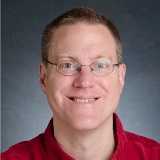
Erland Stevens, PhD, James G. Martin Professor, Department of Chemistry, Davidson College

Erland Stevens is formally trained as a synthetic organic chemist, with a PhD from the Department of Chemistry at the University of Michigan at Ann Arbor. He specialized in nitrogen heterocycle synthetic methodology. After completing his postdoctoral research at The Scripps Research Institute in La Jolla, CA, he joined the chemistry faculty at Davidson College in Davidson, NC. In addition to teaching organic chemistry, he created an undergraduate medicinal chemistry course and later published a textbook, Medicinal Chemistry: The Modern Drug Discovery Process, with Pearson Education. He then created an online medicinal chemistry course, which has been continuously revised and publicly available for approximately 10 years. He subsequently worked with Novartis to create additional online materials that are used with employees for continuing education purposes. He maintains an interest in the computational prediction of pharmacokinetic parameters based on structural features of drug-like structures.

*活動內容有可能不事先告知作更動及調整。

Choose your language
Chinese
Japanese
Korean
English